- 12 min read
- 18 Feb 2026

Introduction
Okay, let's be real. Have you ever stood in the supplement aisle at Apollo or Wellness Forever?
It’s a lot.
A dizzying, brightly-lit wall of bottles, all promising you more energy, shinier hair, the immune system of a superhero, and probably the ability to file your taxes without crying—and you’re just standing there in your Friday-worn t-shirt, wondering if the reason you’re so tired is a lack of B12 or just, you know, life.
It feels like you need a PhD in biochemistry just to pick one. And the questions start swirling. Do I need one with ginseng? What on earth is “chelated” magnesium and does it matter? Why is this one for men and that one for women? Is the expensive one *really* better, or am I just paying for fancy packaging?
Yeah. I’ve been there. So, I figured it was time we had a proper chat about it. Not a lecture from a person in a white coat, but a real, sit-down-with-a-coffee kind of conversation. We’re going to walk through this maze together, figure out what’s what, and find something that actually makes sense for *you*.
Sound good?
First Things First: Do You Even Need a Multivitamin?
This is the big one, isn't it? The million-rupee question. And the honest-to-goodness answer is… maybe.
I know, I know. Super helpful. But hang with me.
In a perfect world, we’d all be eating perfectly balanced, farm-fresh, rainbow-colored meals every single day. We’d get plenty of sleep, frolic in the morning sun for our Vitamin D, and stress would be a foreign concept. In that utopia, a multivitamin would probably be redundant. But back here on planet Earth, where we’re juggling work, traffic, ordering the occasional pizza (or three), and maybe not eating as much palak as our mothers would like, things can get a bit… depleted.
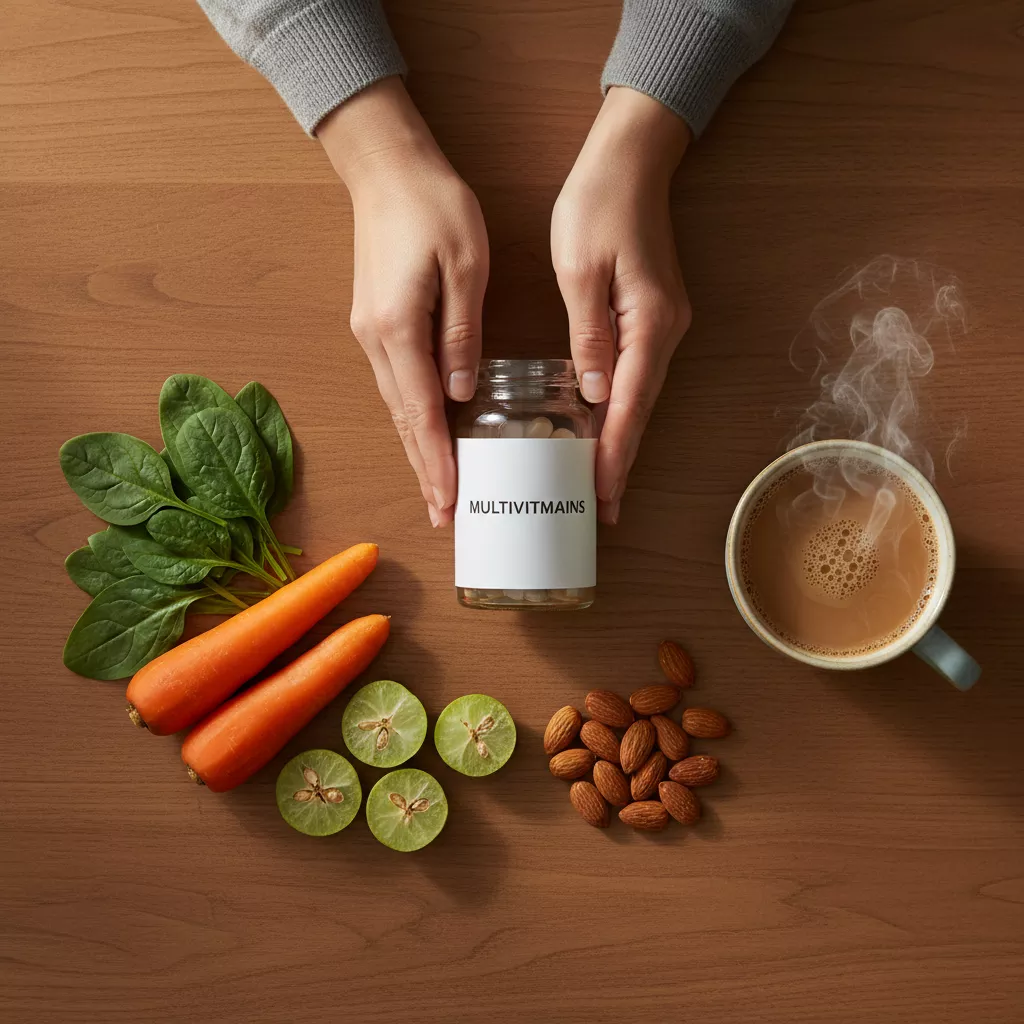
Think of a multivitamin less as a magic pill and more as an insurance policy. It's a safety net. It’s there to fill in the little nutritional gaps that life inevitably creates. It’s not a substitute for a good dal-roti-sabzi meal, but it can be a pretty great teammate.
For some people, it's more than just insurance. Maybe you’re vegetarian or vegan and worried about B12. Or you're a woman who knows her iron levels can dip. Or maybe you're getting older, and your body just isn’t absorbing nutrients the way it used to. These are all perfectly good reasons to consider a daily multi.
The goal isn't to chase some impossible ideal of perfect health. It's about feeling a little bit better, a little more supported, on the days when you just can't. And that’s a pretty reasonable thing to want.
How to Read a Label Without Your Eyes Glazing Over
Alright, you’ve decided to give it a shot. You pick up a box. And you’re immediately confronted with a wall of tiny text that looks more complicated than your phone’s terms and conditions. Let’s break it down. It’s way simpler than it looks. It's like trying to fold a fitted sheet – it seems impossible at first, but once you know the trick, it's (mostly) manageable.
Look for the % RDA (or % DV). This is your North Star. RDA stands for Recommended Dietary Allowance. It tells you what percentage of a specific nutrient (say, Vitamin C) that one tablet provides compared to what the average healthy person needs in a day. You’ll see things like “Vitamin C: 100% RDA.” Simple, right? But here's a little insider tip: you don't always need 100% of everything. For some vitamins, like B vitamins, your body just flushes out what it doesn't use. For others, like Vitamin A or D, getting way too much can actually be not-so-great. So don’t panic if not every single number is at 100%. A good multi is about balance, not just hitting a giant number.
Men’s vs. Women’s Formulas: Is It Just Marketing? Not entirely, no. It's surprisingly complex. Formulations for women (especially pre-menopause) will almost always contain iron, because it's lost during the monthly cycle and iron-deficiency is super common. Men’s formulas, on the other hand, usually have little to no iron, because men don't need as much and too much can build up. You might also see men's versions with things like lycopene (good for prostate health) and women's with biotin and folic acid (for hair, skin, and reproductive health). So yes, there's a reason they're different.
The Alphabet Soup of B12: Methylcobalamin vs. Cyanocobalamin. You might see this on some of the fancier brands. Whoa, big words. What does it mean? Both are forms of Vitamin B12. Cyanocobalamin is the most common, it’s stable and cheap to produce. Your body has to convert it into a usable form. Methylcobalamin is the “active” form, meaning your body can use it right away. Some people feel it works better for them, especially if their body has trouble with that conversion step. Is it a dealbreaker? Probably not for most, but it’s a nice little detail that shows a brand is thinking about bioavailability (another fancy word that just means “how well your body can absorb and use something”).
The “Extras” - Ginseng, Ashwagandha, and Friends. A lot of Indian multivitamins come packed with herbal extracts. You'll see things like Panax Ginseng for energy, Ashwagandha for stress, or Ginkgo Biloba for memory. These can be fantastic additions! But they also make the pill a supplement for a *specific* need. If you’re just looking for a basic nutritional top-up, you might not need all the bells and whistles. If you’re feeling particularly stressed and tired, though, a multi with these adaptogens could be just the ticket. It’s all about what you’re looking for.
And for the love of all that is good, look for the FSSAI logo. This is non-negotiable. The Food Safety and Standards Authority of India (FSSAI) is the official body that makes sure what's on the label is actually what's in the bottle. It's a basic stamp of safety and quality control. No FSSAI mark? Put it back on the shelf. Simple as that.
The Contenders: A Friendly Field Guide to Indian Multivitamins
Okay, theory class is over! Let's get to the good stuff. Who's who in the zoo? I’ve picked a few well-known and respected brands you’ll find pretty much everywhere. I’m not ranking them like some sort of vitamin Olympics; instead, think of them as different personalities. You just need to find the one you’d want to hang out with every day. (And again, super important: I'm not a doctor! This is just friendly advice based on experience and research. Always a good idea to chat with a healthcare professional!).
1. The Old-School Reliable: Supradyn Daily
This one is a classic. It’s probably the multivitamin your dad took. And his dad before him. Supradyn has been around forever for a reason: it's a solid, no-nonsense, get-the-job-done kind of supplement. It has a good spread of essential vitamins and minerals, including trace elements that are sometimes missed in other brands—things like molybdenum and manganese, which sound obscure but do important stuff.
Who's it for? Honestly, almost anyone looking for a dependable, budget-friendly starting point. It’s the Maruti 800 of multivitamins. It’s not flashy, it doesn't have a million horsepower, but it will reliably get you from Point A to Point B. It does contain some sugar in its coating, which is something to be aware of if you're watching that, but for a straightforward, comprehensive daily dose, it's a tried-and-true option.
2. The Energy Booster: Revital H
If Supradyn is the reliable dad, Revital is the energetic uncle. You’ve seen the ads, right? With the big-name celebrities looking impossibly energetic. The key differentiator for Revital H has always been the inclusion of Panax Ginseng. This is where it moves from a simple multivitamin to a multi-plus-something-extra. Ginseng is an adaptogen famed for its ability to fight fatigue and boost physical and mental stamina.
So this isn’t just about filling nutritional gaps—it’s actively trying to give you a little pep in your step. It has a comprehensive vitamin and mineral profile on top of that, so you're covered on all the basics. There’s a Revital H for Men and a Revital H for Women, with the key difference being (you guessed it) the iron content.
Who's it for? Anyone feeling that 3 PM slump a little too hard. If your primary complaint is “I’m just so tired all the time,” and you’ve ruled out other medical issues, the addition of ginseng here might be exactly what you're looking for. It's for the person who feels like their battery is constantly at 20%.
3. The Modern, Clean Pick: TrueBasics Multivit
Now we’re getting into the newer-age stuff. TrueBasics (from the HealthKart family) is all about targeted formulations and clean ingredients. They put a lot of thought into the *forms* of the vitamins they use. For example, they often use those “bioavailable” forms we talked about earlier. Their formulas are often tailored to specific goals—you’ll see options for general wellness, but also for joint health, skin health, or senior-specific needs.
What I appreciate about them is the transparency. They often have clinically researched ingredients at the dosages that were actually used in studies, which is a nice touch. It feels less like guesswork and more science-backed. They also incorporate a bunch of herbal and antioxidant blends, so you're getting more than just the basic A, B, Cs.
Who's it for? The discerning wellness enthusiast. The person who reads ingredient labels not just for allergens but for specifics. If you're looking for a modern, well-researched formula and are willing to spend a bit more for that quality, this is a fantastic place to look.
4. The Plant-Powered Friend: OZiva Plant Based Multivitamins
This one’s for my vegetarian and vegan friends, and anyone who prefers to get their nutrients from whole-food sources. OZiva’s whole philosophy is based on being “plant-based and clean.” Instead of synthesizing vitamins in a lab, they extract them from real foods. So, your Vitamin C might come from Acerola Cherry, and your B-vitamins from a blend of quinoa and moringa.
It’s a different approach, and it resonates with a lot of people. The idea is that your body recognizes and absorbs nutrients better when they come from a food source, bundled with all their natural co-factors. Plus, they add in antioxidant-rich fruit and veggie blends. They have specific men’s (Mettle) and women’s (Vitality) versions, too. The capsules are vegan, and the whole vibe is very clean and green.
Who's it for? The health-conscious person who prefers natural, plant-derived ingredients. If you’re vegan, vegetarian, or just trying to avoid synthetic everything, this is your jam. It’s for the person who shops at the farmer's market and believes that nature often knows best.
5. The Athlete’s Edge: MuscleBlaze MB-Vite
Don't let the name fool you. You don't have to be a bodybuilder to take this. MuscleBlaze is known for its sports nutrition products, so their multivitamin is, unsurprisingly, robust. It’s designed to support an active lifestyle. What does that mean? It usually means higher doses of B-vitamins (for energy metabolism), and a solid dose of antioxidants to help combat the oxidative stress that comes from working out.
MB-Vite is packed. It has a huge profile of 25 different vitamins and minerals, and often includes things like Ginseng, Ginkgo Biloba, and various digestive enzymes to help you absorb all of it properly. It's a powerhouse. It’s built for performance and recovery.
Who's it for? People who are active. Whether you’re hitting the gym, running, playing a sport, or just have a very physically demanding job, this one is designed to keep your engine running smoothly. It’s for the person who asks a bit more from their body and wants to give it the support it needs in return.
A Final, Important Thought: This Isn't Magic
Here’s the thing. You can take the most expensive, most scientifically-advanced multivitamin in the world, but it won't do much if you’re surviving on four hours of sleep, eating junk all day, and are perpetually stressed out.
It's called a *supplement* for a reason.
It supplements a healthy lifestyle; it doesn't create one. So, while you’re picking out your new vitamin buddy, maybe also think about the small stuff. Can you drink one more glass of water today? Can you go for a 10-minute walk? Can you swap that third cup of coffee for a calming herbal tea? These things matter. They matter a lot. The pill is just a small part of a much bigger, much more beautiful picture of you taking care of you.
Conclusion
So, we've made it through the aisle without having a full-blown existential crisis.
Did you see how that wasn't so scary? The whole, overwhelming world of multivitamins really just boils down to one simple thing: figuring out what your body is asking for. Are you looking for a basic, reliable safety net like Supradyn? Do you need an energetic boost from something like Revital H? Are you drawn to the clean, modern science of TrueBasics, the plant-based goodness of OZiva, or the athletic support of MuscleBlaze?
There isn’t a single “best” one. There’s just the one that’s best for *you*, right now. The main takeaway is not to get stressed by the choice, but to feel empowered by it. You have options! You can read a label and understand what it's telling you. You can make a choice that feels right.
Start with one, see how you feel after a month or two. Listen to your body. It's usually pretty good at telling you what's working. And remember, you’re doing a good thing by just being curious enough to read this. You’re taking a step towards looking after yourself. And that’s what really matters.